1/3/13

Nissan SSS Concept


Enayah, whose automotive portfolio includes working for GM and a variety of SEMA projects, shares his dream of what a Nissan-branded rival for the Subaru BRZ, Scion FR-S and Toyota GT 86 would look like with a design study named the SSS Concept.


Here’s how Enayah describes his project:

"I have been struggling to find the perfect car for me to drive as I make a 120 mile round trip to work I am looking at the Mustang GT, and the Subaru BRZ (sold also as Scion and Toyota FR-S). I am not too excited about the Mustang’s Gas mileage for my trip, and not too fond of FR’s styling, and by the way the 370Z is way out of my price range."

"So I decided to start designing my dream commuter hoping that Nissan could get inspired again to bring the SSS back. This car is my rendition of the SSS which I named 010 it is a V6 rear wheel drive I would like it to have a base price around $24,500, 250 HP and 3100 Lb."

Well, we're not sure about the V6 engine option, but we could definitely see a sports coupe like the SSS fitted with a four-cylinder turbocharged engine and RWD placed right under the 370Z, both in terms of performance and pricing, in Nissan's range.


1/2/13

VW Rocky SUV


Here's another design concept for a small crossover model utilizing the platform hardware from the Volkswagen Up! family of mini cars.


 The Rocky Concept featured in these renderings maded by designer Rafael Gordo García from Spain, is a little bit more compact at 3.7 meters (146 inches) long, with the three-door model dreamt up to run on electric power.

For more details on the the Rocky Concept, head past the break to read García's description of the project.
VW Rocky Concept Project by Rafael Gordo García:“In the exterior I was looking for a really strong, solid image, that could be recognized as a Volkswagen at first glance, but with a younger, more daring look than the rest of VW SUV’s (Tiguan, Touareg).”
“The proportions, with the short, horizontal hood and really short overhangs, give the Rocky a very solid yet agile image.
“Its boxy forms, wide sheet surfaces and pronounced fenders provide the car of a great stance.
“The narrow and angular DLO gives the Rocky a very dynamic look, without being claustrophobic thanks to the wide glass ceiling.
“The front end has the familiar Volkswagen face, with big headlights fitted on the horizontal, narrow grill like those of the first Golf. The graphic seen on the door also reminds of the classic 181, the ‘first’ off-road Volkswagen, Small cameras on the top of the floating cant rails work as mirrors.”
“At the rear, the glass back door framed inside the body gives the car a really solid image from behind. The elevated pilot lights they blend with the spoiler on the top, creating a floating effect.”
The car is powered by four electric motors set inside the wheels; the light plastic rims completely cover and protect them, with the five arms ‘floating’ over the center.”
“Due to its structure, the Rocky could also fit an explosion/hybrid engine under its hood if necessary in any particular market.”
“There’s also a more rugged version with unpainted bumpers and fenders and aluminum touches.”


VW Ayoreo


The Volkswagen Ayoreo is a coupe designed to enter the EV market in 2013.The goal was to achieve a fairly simple and clean surface language with incorporated industrial elements, like its rear view cameras. A more affordable option then Tesla S, but hopefully a more appealing one then the Nissan Leaf.

 It was imagined a five-seater model with four in-wheel electric motors producing a total of 240-horsepower.


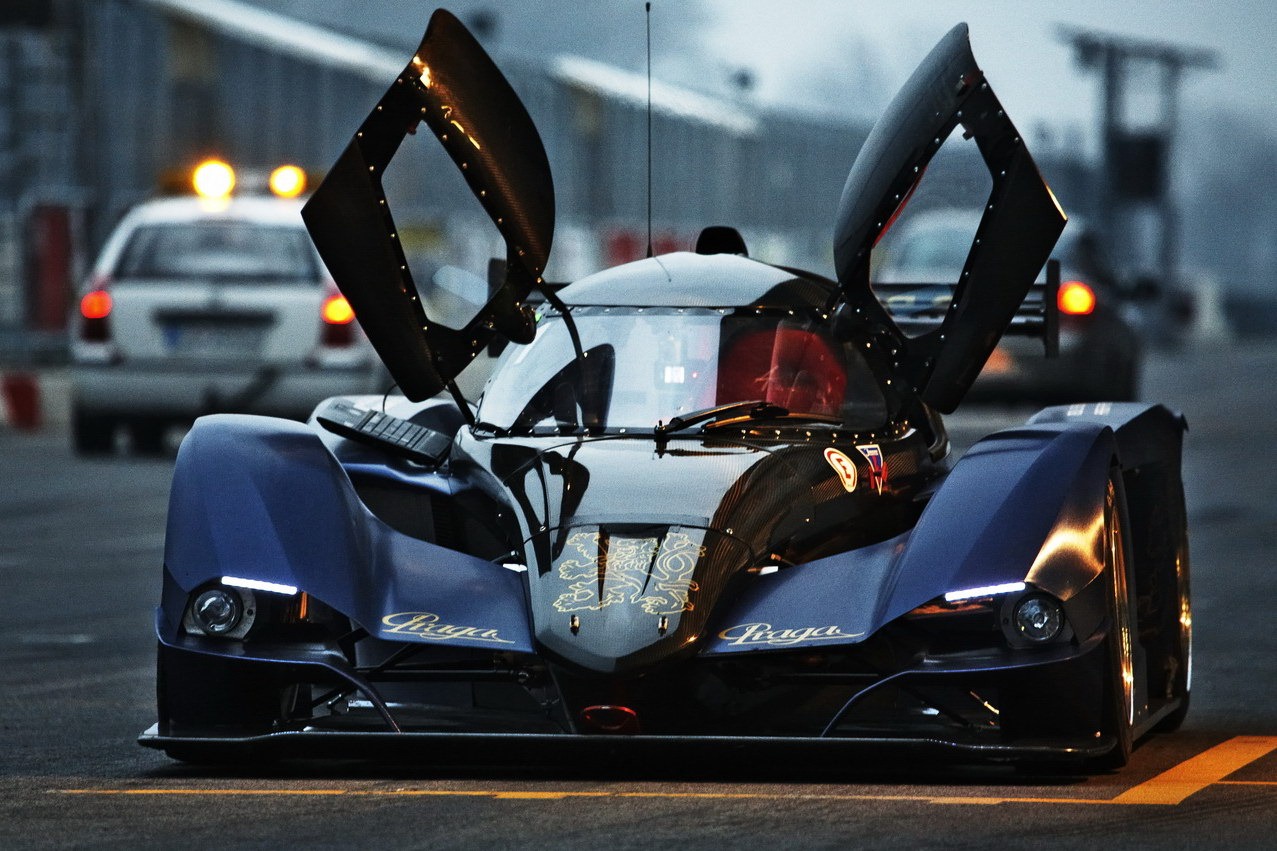
Praga R1 with 207HP, 592 kg Carbon Fiber maded in Slovakia


It’s not surprising then that the Praga R1 is a track car. What is startling, though, is that a. it’s its third car, after the R4 and R4RS, and b. that, as the company states, it’s “ready to be driven on public roads if required”.


We see no reason why anyone wouldn’t want to drive the R1 on public roads - apart from scratching that beautiful carbon splitter, that is.

It may boast only 207HP from its mid-mounted 2.0-liter four-cylinder engine that’s the same as the one used in the Formula Renault, but it also has a kerb weight of only 590 kg (1,300 pounds), thanks to its carbon fiber chassis and carbon and Kevlar bodywork, which makes for a low 3,58 kg/kW weight-to-power ratio.

Even though no official numbers are announced, performance is bound to be more than adequate.
The F4R 832 engine features a Cosworth / Pectel ECU with traction control and transmits its power to the rear wheels via a Hewland six-speed sequential gearbox placed in the rear, in a transaxle configuration, with pneumatic paddle shifts and a ZF Sachs twin-plate clutch.

There’s a fully adjustable double-wishbone aluminum suspension all around while AP Racing discs with four-piston calipers take care of braking.

The wild-looking R1 not only conforms to all FIA safety regulations, but it can also be fitted with a passenger seat and front lights if the owner so wishes (rear lights, along with turn signals, are standard).

Production started last month after prototype testing was concluded in October. The first cars will compete in the one-make Praga Cup series around European circuits and the company says there’s more to come “in the upcoming months”. A road-going version will do very nicely indeed, thank you...